Қазакстан культуры: Nomadic традициялар, музыка пен қадағалауын ритуалды
The culture of Kazakhstan is a living blend of nomadic Turkic heritage, Islamic tradition, Silk Road cosmopolitanism, Soviet-era transformation, and post-independence nation-building. Rooted in over 3,000 years of pastoral nomadism on the Eurasian steppe, Kazakh culture is defined by extraordinary hospitality (konakasy), the sacred bond between people and horses, communal feasting around the dastarkhan, oral poetry and dombra music, and a worldview shaped by the vast open landscape. Today, Kazakhstan's 20 million people maintain these traditions while building one of Central Asia's most dynamic modern societies, a culture that UNESCO has recognized through multiple Intangible Cultural Heritage inscriptions.
Nomadic Heritage: The Foundation of Kazakh Culture
The deepest layer of Kazakhstan's culture comes from pastoral nomadism. For over three millennia, Kazakhs and their ancestors moved across the steppe with herds of horses, sheep, cattle, and camels, following seasonal migration routes called zhailau (summer pastures) and kystau (winter camps). This way of life produced a value system that remains visible in modern Kazakh society:
- Hospitality (konakasy): feeding and sheltering any traveler was sacred duty, not optional kindness
- Adaptability: surviving winters of -40°C and summers of +40°C required flexibility and resilience
- Collective decision-making: the kurultai (council of elders) governed through consensus
- Oral tradition: without permanent settlements, knowledge traveled through song, poetry, and proverb
- Horse culture: the horse was transportation, wealth, food source, companion, and spiritual symbol
The Kazakh social structure was organized into three zhuz (hordes): the Elder Zhuz (Uly Zhuz) in the southeast, the Middle Zhuz (Orta Zhuz) in the central and northern steppe, and the Junior Zhuz (Kishi Zhuz) in the west. Every Kazakh traditionally knew their genealogy seven generations back, a practice called zheti ata, which governed marriage rules (you could not marry within seven generations of shared ancestry) and reinforced clan identity. These genealogical rules still influence modern Kazakh wedding traditions.
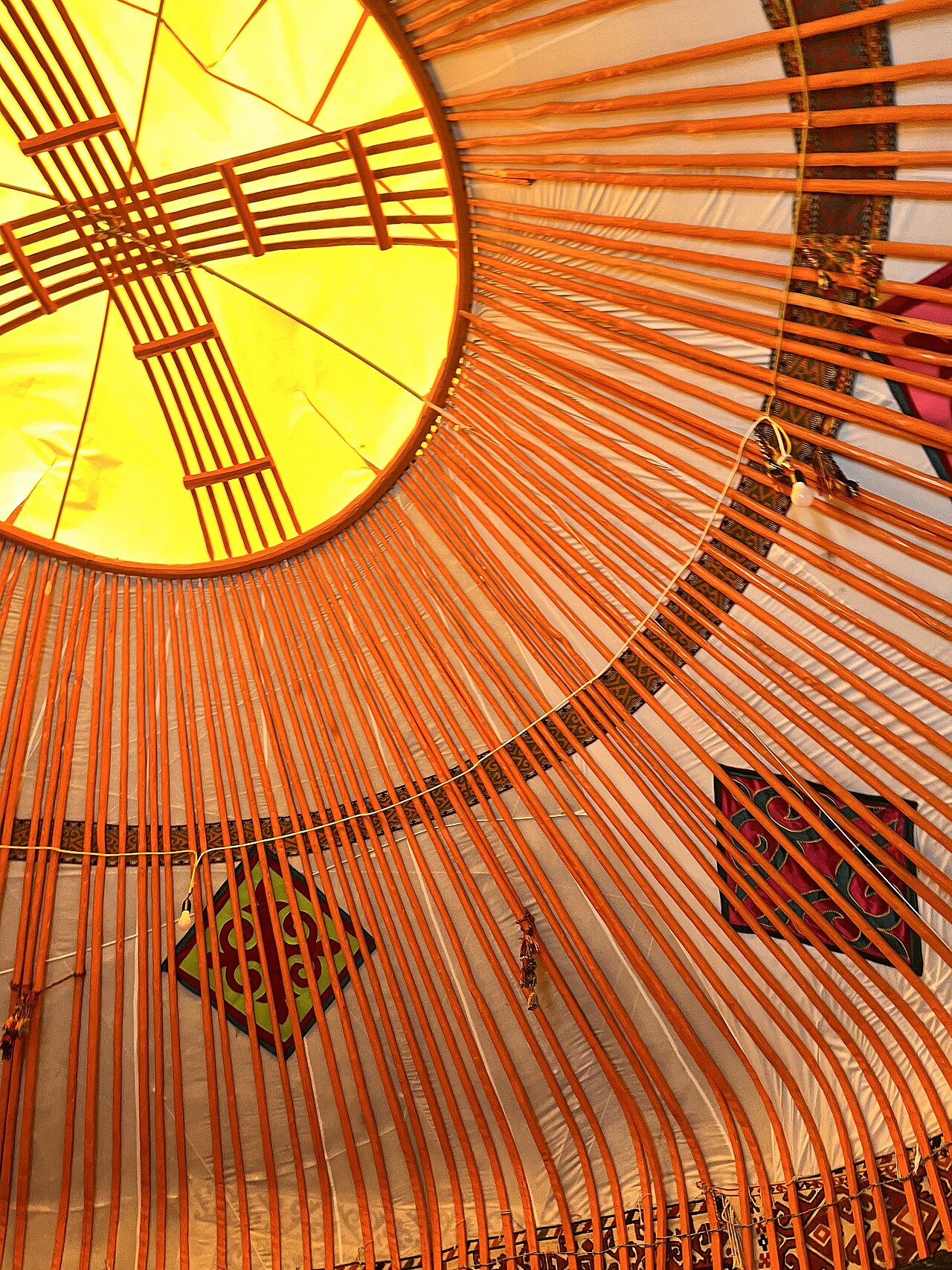
The yurt (kiiz uy) was the physical expression of nomadic life. A skilled family could assemble or disassemble a yurt in under an hour. The interior followed strict spatial rules: the tor (place of honor opposite the entrance) was reserved for elders and distinguished guests, while the left side was the male domain and the right side was the female domain. UNESCO inscribed the traditional knowledge of constructing and using the Kazakh yurt as Intangible Cultural Heritage in 2014.
Even today, yurts appear at every major Kazakh celebration, from Nauryz festivals to wedding receptions. They are not relics but living symbols of identity. For a comprehensive overview that combines all aspects of heritage, see our guide to Kazakhstan culture and traditions.
Music, Oral Tradition & the Dombra
Music is inseparable from Kazakh identity. The dombra, a two-stringed, long-necked lute, is the national instrument, found in virtually every Kazakh household. UNESCO inscribed the art of playing the dombra (dombyra kuy) on its Representative List of the Intangible Cultural Heritage of Humanity in 2014, and Kazakhstan celebrates National Dombra Day on the first Sunday of July, when mass dombra performances draw tens of thousands of simultaneous players. Many famous people from Kazakhstan, from legendary composers to modern pop stars, built their careers on the musical traditions rooted in dombra culture.
Kui: Instrumental Storytelling
The kui (also kuy) is a uniquely Kazakh art form: an instrumental composition for dombra that tells a complete story without words. Each kui has a narrative: a battle, a love story, the death of a hero, or the beauty of a landscape. The most famous include:
- Aksak Kulan: attributed to the legendary Ketbuga, tells of a wounded wild horse
- Adai: an epic piece associated with the Adai clan of western Kazakhstan
- Saryn: compositions used to calm wild horses during training
Aitys: Poetic Dueling
Aitys is an improvisational poetic contest where two akyns (poet-musicians) compete in real time, trading witty, satirical, and profound verses accompanied by dombra. Topics range from philosophy to politics to love. Aitys competitions remain hugely popular in Kazakhstan, major events are televised nationally and winners become cultural celebrities. UNESCO recognized aitys as Intangible Cultural Heritage in 2014.
The oral tradition also preserved the great Kazakh epics: Kyz Zhibek, Kozy Korpesh and Bayan Sulu, and Er Tostik, stories of love, heroism, and the supernatural that were recited by zhyrau (epic singers) at gatherings for centuries before being written down. These epics carried the moral code, history, and collective memory of the Kazakh people across generations.
Dastarkhan & Hospitality Culture
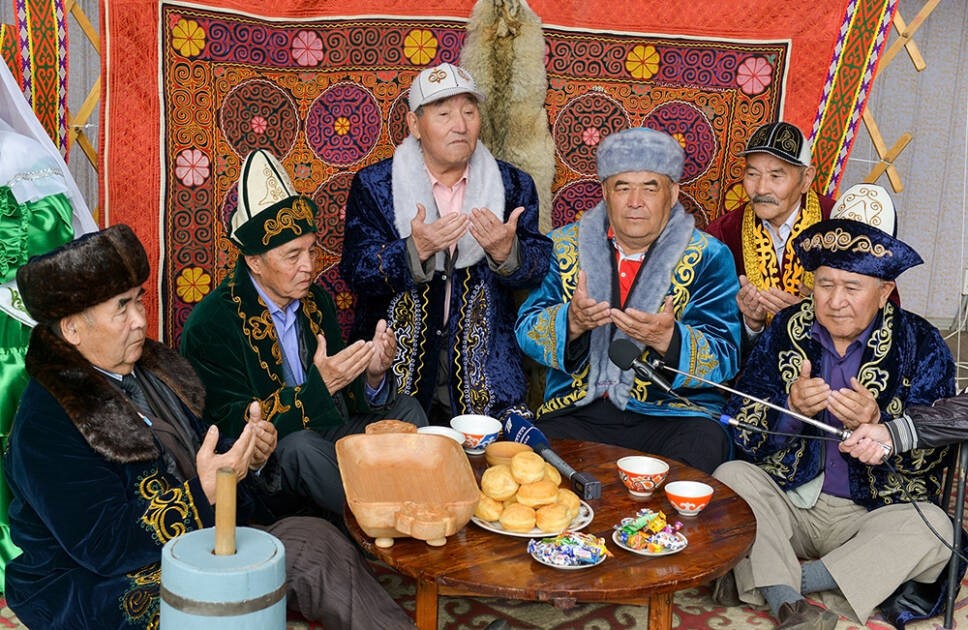
The dastarkhan (literally "tablecloth") refers to the spread of food, drink, and sweets that greets every guest in a Kazakh home. Hospitality in Kazakhstan is not a social nicety; it is a moral obligation with codified rules dating back centuries.
The Rules of Kazakh Hospitality
Kazakh tradition identifies three levels of guest reception:
- Konakasy (basic hospitality): any unexpected visitor receives tea, bread, and whatever food is available, without question or hesitation
- Konakkade: when a respected guest arrives, the host slaughters a sheep specifically for the occasion
- Sybaga: the distribution of meat portions at a feast follows strict social hierarchy. The bas (head of the sheep) goes to the most honored elder; the jambas (hip bone) to the next most senior guest; specific cuts correspond to specific relationships
Tea Ceremony
Tea (shai) is the centerpiece of daily Kazakh hospitality. The host (traditionally the youngest woman at the table) pours tea into small piala bowls, filled only halfway. A full bowl signals the host wants the guest to leave; a half-full bowl means "stay, there is more coming." Tea is always served with baursak (fried dough), kurt (dried curd), dried fruits, sweets, and irimshik (pressed cottage cheese).
A typical Kazakh family drinks 5-7 rounds of tea per day. According to the Kazakhstan Ministry of Agriculture, Kazakhstan consumes approximately 1.2 kg of tea per capita annually, one of the highest rates in Central Asia.
For a deeper look at hospitality customs, see our guide to Kazakhstan traditions.
Food Culture: Meat, Dairy & the Steppe Kitchen
Kazakh cuisine is the cuisine of pastoral nomads, built on meat (horse, lamb, beef) and dairy (fermented mare's milk, curd, cream) with bread, noodles, and seasonal vegetables added over centuries of Silk Road contact. Food in Kazakhstan is never just sustenance; it is social glue, ritual, and identity.